Temple Bar
Dublin’s most talked-about quarter: cobbled lanes, packed pubs and the Liffey on your doorstep, best booked with eyes open.
 Temple Bar
Why people stay in Temple Bar
Temple Bar is a small wedge of streets on the south bank of the Liffey, bounded roughly by the river to the north, Dame Street to the south and Westmoreland Street to the east. It is not a single bar but a district, and the name confuses first-time visitors who expect one big pub. The lanes are narrow, partly cobbled and pedestrianised in places, and the whole area is compact enough to cross in ten minutes on foot. It sits directly across the river from O’Connell Street and a short walk from Trinity College, which is why so much of the city’s visitor traffic passes through it.
This area suits people who want to step out of their hotel and into the middle of things: live music, late bars, restaurants within a two-minute walk, and no need for taxis at night. It suits short city breaks and groups. It does not suit light sleepers, families with buggies on Friday and Saturday nights, or anyone who wants a quiet residential feel. If you are in Dublin to work in a quiet room, or you are travelling with young children, look at St Stephen’s Green or the Georgian squares instead and visit Temple Bar as a day trip.
By day the quarter is pleasant and slightly sleepy. Cafes open late morning, the cobbles are being swept, delivery vans thread through the narrow lanes and tourists drift between the Ha’penny Bridge and Dublin Castle. By evening, especially Thursday to Saturday, the character changes sharply: outdoor seating fills the lanes, music spills out of doorways and the streets stay busy well past midnight. Sunday afternoons are lively but gentler. If you want the atmosphere without the crush, aim for a weekday evening or a daytime visit.
The streets here are short and irregular: Temple Bar itself, Eustace Street, Curved Street, Crown Alley and Merchant’s Arch, which opens onto the Ha’penny Bridge. The area backs onto Dame Street and Meetinghouse Lane, with Dublin Castle and City Hall a few minutes uphill. Everyday life is a mix of hospitality workers, artists' studios and small offices, with the Irish Film Institute and the Project Arts Centre among the cultural anchors. It is a working quarter as much as a nightlife one, though the balance tilts heavily towards visitors.
Food in Temple Bar ranges from pub grub to mid-range international restaurants, and prices reflect the footfall. You will find good fish and chips, burgers, pizza and a solid range of Irish breakfasts, but this is not where locals go for a special dinner. For better value, walk ten minutes to the south side of Dame Street or across the river towards Capel Street. The weekend markets around Meetinghouse Square are worth a look for coffee and snacks. Ask your host for their current favourite; the good spots change and the tourist-facing ones do not always keep up.
Dublin is mild and wet rather than cold and snowy. Expect rain in any month, temperatures around 4-8°C in winter and 15-20°C in summer, with long daylight from May to August. Temple Bar’s cobbles get slick and the lanes are exposed, so bring a waterproof layer rather than an umbrella, which the wind will wreck. Summer weekends are the busiest and most expensive; late spring and September give you decent weather with slightly thinner crowds. Christmas is atmospheric but packed, especially around the switching-on of the lights.
This is one of the more expensive places to sleep in Dublin because of location. Expect mid-range doubles roughly €180-280 (about $195-305) a night in high season, with budget rooms nearer €120-160 and boutique or river-view rooms well above €300. Food and drink carry a premium too: a pint in a busy Temple Bar pub can cost noticeably more than a few streets away. You are paying for the address. If the budget is tight, stay here one or two nights and shift elsewhere for the rest of the week.
Book early for weekends, St Patrick’s Day and any large event at the conference centre or the stadiums, when prices spike and availability disappears. Ask specifically whether your room faces the street, and whether the hotel has double glazing or secondary glazing; the difference between a quiet and a noisy night is often one window. Some buildings are old and have steep stairs and no lift, so confirm access if that matters. Noise from pubs and late-night crowds is a genuine issue on weekends, not a minor annoyance.
The best sleeping streets are the quieter edges of the quarter rather than the middle. Look at the blocks towards Dame Street and Meetinghouse Lane, and the streets running down to the river near the Ha’penny Bridge, where you get the location without a pub directly under your window. Eustace Street and the streets around the Irish Film Institute are relatively calm. Avoid rooms directly over or beside the busiest bars on Temple Bar and Crown Alley if you value sleep, and be sceptical of listings that describe the area as 'lively' without mentioning soundproofing. Hotel types here are mostly small independent hotels, guesthouses and a handful of larger chains, with few self-catering apartments and almost no hostel-free corners. There are budget rooms above pubs, which can be good value if you are out late anyway, and smarter boutique properties on the fringes. Price bands run roughly €120-160 for a basic double in low season, €180-280 in high season, and €300-plus for the better rooms with river views or extra space. Weekend rates climb sharply. Ask about breakfast, whether it is included and whether it is served in a room facing the street; ask about lift access in older buildings. If you are a light sleeper, request a courtyard or rear-facing room at the time of booking, not on arrival, and confirm the hotel’s policy on late-night noise.
Things to do in Temple Bar
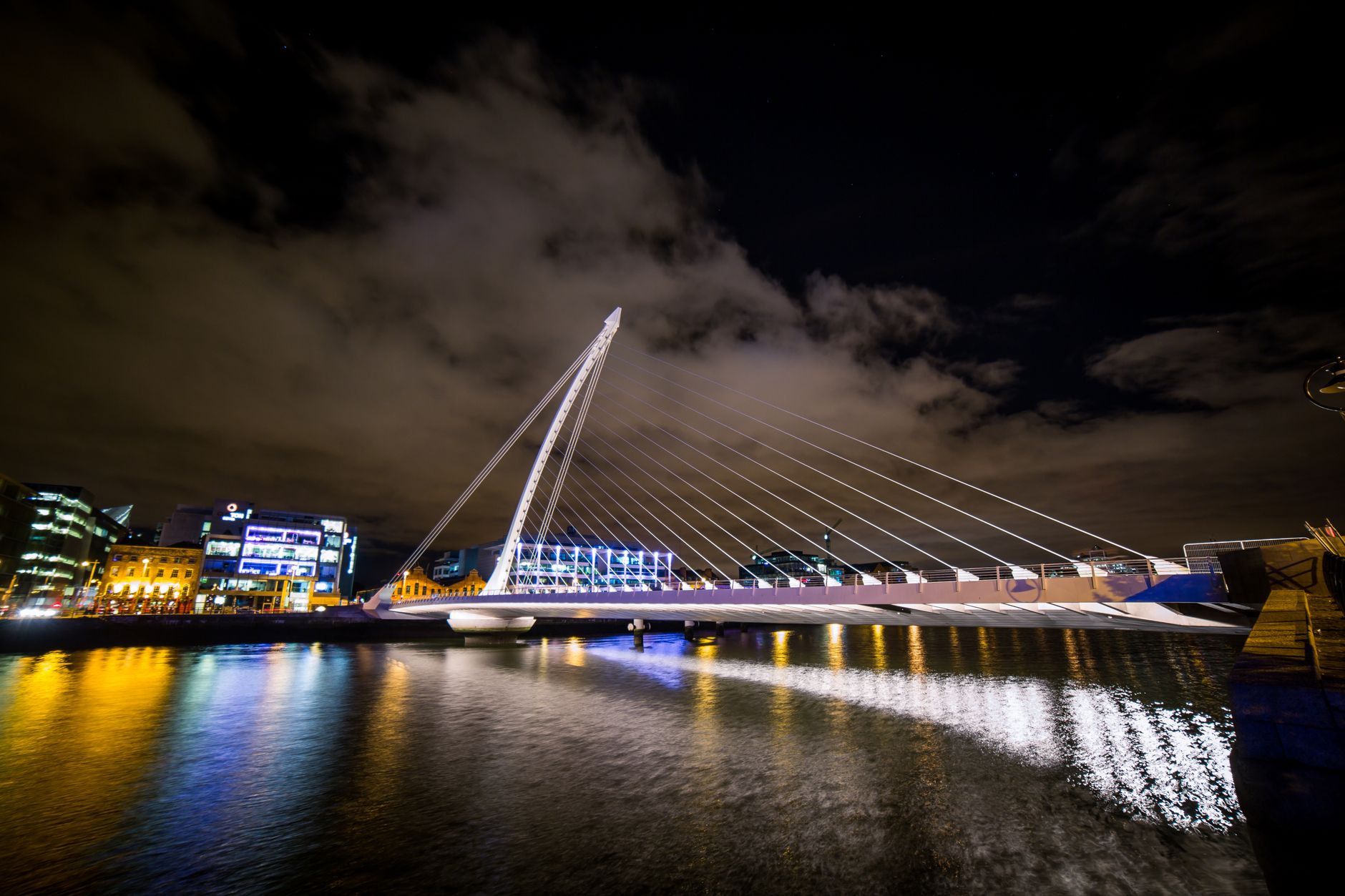
The cast-iron footbridge over the Liffey is the area’s best free landmark and the natural way into the north city. It is short, so it is about the view rather than the crossing: look east towards the Custom House and west towards the Four Courts. Go early morning or after dusk when it is lit, and expect crowds on weekend afternoons. Ten minutes is plenty, then walk down to the riverbank or back through Merchant’s Arch.

The IFI on Eustace Street screens Irish and international cinema in a small, civilised setting, with a cafe that is a good rainy-day refuge. It is worth it for the programme alone, which mixes new releases with archive and documentary. Check listings online before you go; screenings are not continuous. A ticket and a coffee make a good two-hour break from the streets, especially mid-afternoon when the lanes are busiest.
A few minutes uphill from the quarter, the castle complex includes the State Apartments, the Chapel Royal and the Chester Beatty collection. It is worth an hour or two if you like history and decorative interiors, and the courtyard is free to walk through. Go on a weekday morning to avoid groups, and check opening hours before setting out as they vary by season. Bring a light layer; the stone buildings stay cool.

Meetinghouse Square hosts markets and events through the year, and the surrounding lanes fill with stalls selling coffee, baked goods and hot food. It is a good, low-commitment way to eat lunch and people-watch. Go late morning before the queues build, bring cash as a backup, and check the schedule online because it is not every day. Thirty to sixty minutes covers it comfortably.

Temple Bar’s reputation rests on its music, and several pubs run traditional sessions in the early evening and cover bands later. Pick a place by ear rather than by signage, and go early enough to get a seat. Expect higher drink prices than a few streets away. A weekday evening gives you the atmosphere with less elbow room trouble; weekend nights are standing-only in the popular spots. Bring ID; door staff check.

The north and south quays give you a longer, calmer walk than the lanes, with views of the bridges and the Custom House. Start at the Ha’penny Bridge and head east for twenty minutes, or west towards the Four Courts. It is free, flat and good in any weather with a coat. Best at golden hour or early morning. Watch for cyclists on the riverside paths.
What to see
Hotels near Temple Bar
No hotels are listed in Temple Bar yet. The nearest ones are on the region page.


Every hotel we cover in Temple Bar
- Dominick Place 3★ · 5/5
- Staycity Aparthotels Dublin City Centre 4★ · 4.7/5
- NYX Hotel Dublin Christchurch 4★ · 4.6/5
- Zanzibar Locke 4★ · 4.6/5
- The Morrison Dublin Curio Collection by Hilton 5★ · 4.5/5
- The Norseman Temple Bar 4★ · 4.5/5
- Harding Hotel 3★ · 4.5/5
- The Sweeney 3★ · 4.5/5
- Ruby Molly Hotel Dublin 4★ · 4.4/5
- Maldron Hotel Parnell Square Dublin City 4★ · 4.3/5
- Tom Dick and Harriet’s 3★ · 4.3/5
- The Clarence 5★ · 4.2/5
- Arlington Hotel Temple Bar 3★ · 4.2/5
- Leonardo Hotel Dublin Christchurch 4★ · 4.1/5
- Fitzsimons 3★ · 4.1/5
- Fitzsimons Hotel Temple Bar 3★ · 4.1/5
- The Mercantile Hotel 3★ · 4/5
- Dublin Citi Hotel 2★ · 4/5
- Handel’s Hotel 3★ · 3.9/5
- Paramount Hotel 3★ · 3.9/5
- The Temple Bar Lane 3★ · 3.9/5
- The Central Hotel 3★ · 3.8/5
- Fownes Street Central Templebar 3★ · 3.2/5
- RiverHouse Hotel 2★ · 2.4/5
Getting around Temple Bar
Dublin Airport is about 10-12 km north of the city. The most reliable options into Temple Bar are the airport coach services, which drop near O’Connell Street and the quays, then a ten-minute walk across the river, or a taxi, which typically takes 25-45 minutes depending on traffic and costs roughly €25-40 (about $27-43). Ride-hailing apps work but pick-up points near the narrow lanes are limited. By public transport, the Luas Red Line stops at Jervis and Abbey Street on the north side, and the Green Line at Trinity and Westmoreland on the south, both within a short walk. Several bus routes run along Dame Street and the quays. Driving is a poor idea: the lanes are pedestrianised or one-way, parking is scarce and expensive, and many hotels have no spaces. If you must drive, use a city-centre car park and expect to pay by the hour. Once you are here, walk everything; the quarter is small and the main sights are within 15 minutes on foot. For longer trips, taxis from the nearby ranks on Dame Street and Westmoreland Street are easy to find by day and harder after midnight, when you may wait. Allow 10-15 minutes to reach Grafton Street on foot, 20 to St Stephen’s Green, and 15 to O’Connell Street across the bridge.
Questions about Temple Bar
Yes, on Thursday to Saturday especially. The busiest lanes have outdoor seating, live music and crowds until well after midnight, and sound carries into street-facing rooms. Hotels vary a lot in how well they insulate. If sleep matters, request a rear or courtyard room at booking, ask about double glazing, and consider staying on the quieter edges towards Dame Street. Sunday to Wednesday is noticeably calmer.
It works for daytime sightseeing but is not ideal for sleeping with young children because of weekend noise. If you stay, choose a hotel on the quieter edges and ask for a quiet room away from the street. During the day the area is safe and walkable, with short distances to the castle and the river. Many families prefer St Stephen’s Green or the Georgian squares and visit Temple Bar for an afternoon.
Pubs generally do not take bookings and you find a table by luck and timing. Restaurants in the quarter vary; the busier ones take reservations for dinner, and it is worth booking for Friday and Saturday. For walk-ins, eat early, around 5.30-6.30pm, before the evening rush. If a place looks like a tourist trap with photos of food outside, it often is; walk a few streets for better value.
Expect roughly €120-160 for a basic double in low season, €180-280 in high season, and over €300 for better rooms or river views. Weekend and event nights push prices up sharply, and St Patrick’s Day is the most expensive of the year. Book well ahead, check whether breakfast is included, and confirm the cancellation policy, since rates here swing more than in quieter parts of the city.
Yes. Trinity College is about ten minutes on foot, Dublin Castle five to ten, Grafton Street fifteen and O’Connell Street fifteen across the bridge. St Stephen’s Green is around twenty minutes. The ground is flat and the distances short, though the cobbles are uneven. For anything further, the Luas and buses are close by, and taxis are easy to find on Dame Street during the day.