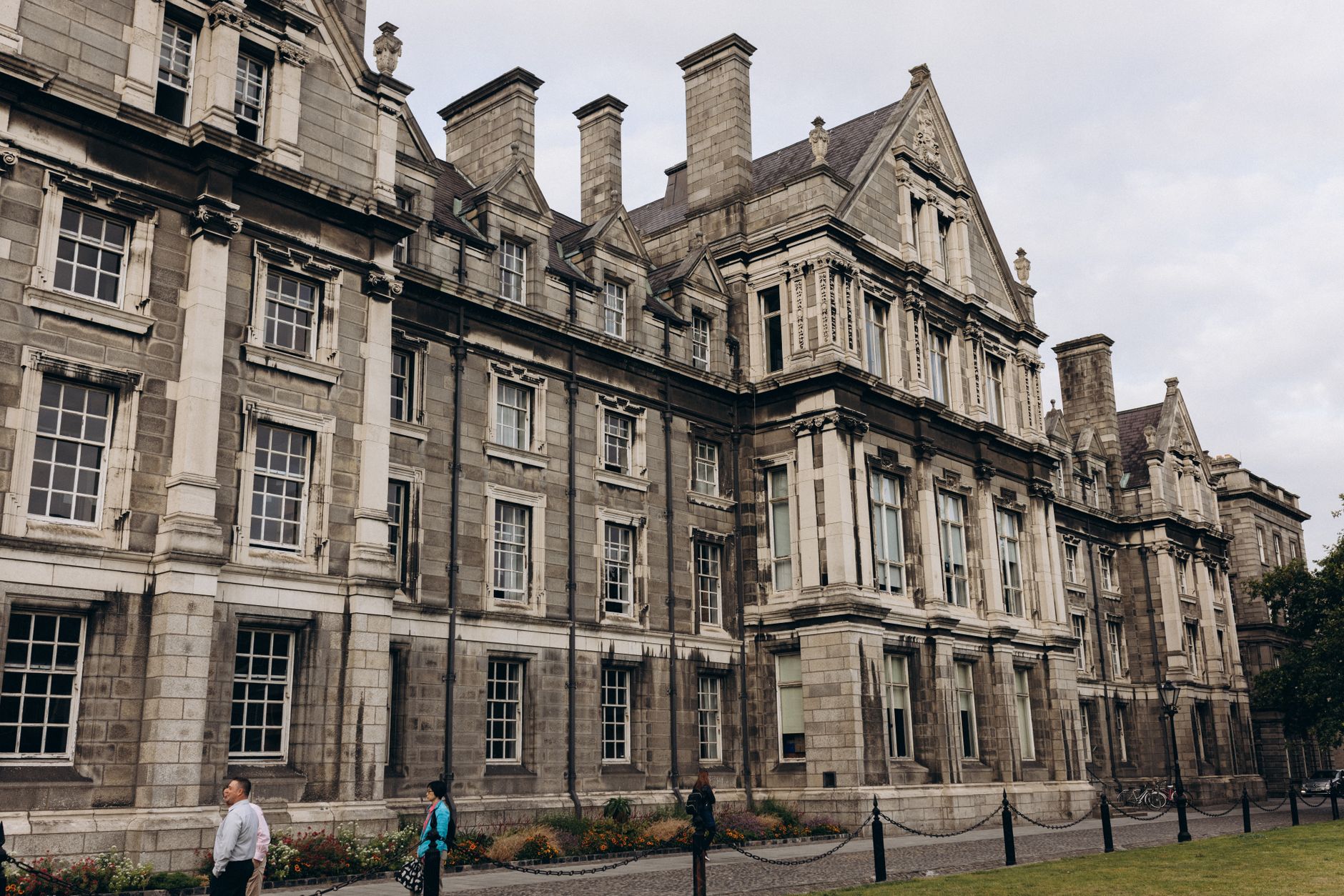
The Liberties
Dublin’s old market quarter, where medieval lanes, St Patrick’s Cathedral and a working distillery sit beside new cafés.
 The Liberties
Why people stay in The Liberties
The Liberties sits just west of Dublin Castle and south of the River Liffey, in the part of the old city that grew up outside the medieval walls. The name comes from the old manorial freedoms granted to the area centuries ago, and the street pattern still reflects that past. Thomas Street and James’s Street form its spine, with narrow lanes running off toward the cathedral and the old city walls. It is only about a fifteen-minute walk from Temple Bar and Grafton Street, but it feels like a different, more workaday part of the city, with a long history of brewing, distilling and textile trades that is still visible in the buildings.
The Liberties suits travellers who want old Dublin rather than polished Dublin, and who are happy to walk a few minutes further for a quieter bed. History-minded visitors, people interested in food and drink production, and families visiting the two cathedrals all do well here. It does not suit anyone who wants every restaurant and bar within a two-minute stroll, or who needs level, wide pavements everywhere. Parts of the quarter are genuinely old and uneven underfoot, and some side streets empty out at night. If you want bright lights and crowds on your doorstep, stay closer to Temple Bar; if you want real neighbourhood texture, this is the place.
By day the Liberties is busy in a functional way: delivery vans on Thomas Street, shoppers at the markets, tourists drifting between the cathedrals. The food and drink side has grown noticeably, with cafés and tasting rooms opening in old warehouses. Evenings are calm by city-centre standards. The main streets stay reasonably active thanks to pubs and restaurants, but turn down a lane and it goes quiet fast. It is not a late-night district in the way Temple Bar is, and that is a large part of why people choose to sleep here. Expect to hear more chatter than traffic after about nine in the evening.
The streets to know are Thomas Street, James’s Street, Meath Street and Francis Street, the last long associated with antique dealers. St Patrick’s Cathedral and Christ Church Cathedral bracket the quarter, and the old city wall fragment near St Audoen’s is a short walk away. Everyday life is very much present: schools, a community centre, corner shops and a couple of busy markets. The Iveagh Market building on Francis Street is a local landmark, and the area has a strong tradition of street trading that you can still see, particularly around Meath Street in the mornings. This is a lived-in neighbourhood, not a stage set.
Food here leans toward the practical and the good-value: bakeries, delis, casual cafés, and a growing number of spots doing modern Irish cooking in old buildings. The two big draws for many visitors are the distillery visitor experiences around James’s Street and the food stalls and casual eating around the markets. Locals tend to shop in the morning and eat early. If you want a proper sit-down dinner, book ahead for the better-known places; the very casual spots are more forgiving. Ask at your hotel about which market days are busiest, since they change and are worth planning around.
Dublin is mild rather than dramatic, and the Liberties is a walking area, so rain is the main thing to plan for. Spring and early autumn are the most comfortable times to wander the lanes and cathedral grounds. Summer brings the most visitors to the cathedrals and the distillery tours, so mornings are better than afternoons. Winter is quiet and atmospheric, with short daylight hours and plenty of indoor things to do. Whatever the season, bring a rain jacket rather than an umbrella for the narrow streets, and wear shoes you can walk in on old paving.
Prices in the Liberties sit below the Grafton Street and Temple Bar end of the market, which is one of its main selling points. Expect mid-range to budget hotels and guesthouses rather than five-star properties, with a decent spread of options for a city-centre location. Food is generally good value, especially at lunch, and the casual cafés are kinder to a family budget than the tourist-strip restaurants. Drinks in local pubs are typically cheaper than in the most visited parts of the centre. Cathedral entry and distillery tours are paid attractions, so budget for those separately.
Before you arrive, know that the Liberties is a real neighbourhood, which means some streets are scruffier than the postcards and a few are better avoided late at night. Check the exact location of your hotel relative to Thomas Street and the cathedrals, since the quarter is larger than it looks on a map. Parking is limited and often paid, so a car is more hindrance than help. Most of the main sights are within a fifteen-minute walk, and the Luas tram line runs along the northern edge, which makes getting in and out straightforward once you know your nearest stop.
The best places to stay in the Liberties are close to Thomas Street and the stretch between the two cathedrals, where you get the atmosphere and the convenience without being on top of the busiest traffic. The streets around St Patrick’s Cathedral and along Patrick Street are quiet at night and a short walk from the centre. Francis Street and the lanes off it are calmer still, good if you value sleep over nightlife. The area near James’s Street and the distillery is handy for tours but a little more exposed to through traffic. Hotels here are mostly mid-range and budget, with a handful of small guesthouses and aparthotels; don’t expect big international luxury brands. Expect roughly €120–200 a night for a decent mid-range double, less in winter and more during major events. Ask your host about parking before booking, because on-street spaces are scarce.
Things to do in The Liberties

The largest cathedral in Ireland and the burial place of Jonathan Swift, with a long nave and a good deal of stone-carved detail. Allow about an hour for the interior and the small park beside it. Go early in the morning if you want it quieter, and check the official website for service times, since visiting hours pause for worship. It is a short walk from Thomas Street and easy to combine with Christ Church in the same afternoon.

Dublin’s older cathedral, linked to the Liberties by history and by the old city fabric around it. The crypt is the draw for many visitors, and the building sits right beside the medieval street pattern. Give it around 45 minutes to an hour. It is close to the Luas line, so it makes a sensible first or last stop of a walking day. Check opening times on arrival, as they vary by season and around services.

The Liberties has a long association with distilling, and the visitor centres around James’s Street run guided tours with tastings. Book ahead, because popular slots fill, and allow around 90 minutes. Tours are usually best in the late morning or early afternoon if you want the rest of the day free. You will need photo ID for the tasting, and it is a sensible idea to eat beforehand. Check the official sites for current tour times and prices.

Francis Street is the traditional home of Dublin’s antique trade, and wandering it plus the lanes toward the cathedral gives a real sense of the old quarter. It is free and best done slowly on a weekday morning when the shops are open and the streets are calm. Bring a rain jacket, since you will be outdoors, and comfortable shoes for uneven paving. Combine it with a coffee stop and a look at the market buildings rather than treating it as a single destination.

The Liberties still has working street markets, and they are the best way to see everyday life here rather than tourist life. Go in the morning, when stalls are fullest, and bring small change. Days and times vary, so ask at your hotel or check locally before setting out. It is a good family stop, but keep hold of bags and children in the crowds. Combine a market visit with a bakery stop and a walk toward the cathedrals.

The pubs in the Liberties are generally plainer and cheaper than their Temple Bar equivalents, with more of a local crowd. Pick one on Thomas Street or nearby and go early in the evening for a quieter seat and a chance to talk to staff. It is a good way to end a day of walking. Families should check the pub’s policy on children, which varies, and everyone should check current licensing hours on arrival rather than assuming.
What to see
Hotels near The Liberties
No hotels are listed in The Liberties yet. The nearest ones are on the region page.


Every hotel we cover in The Liberties
- Hyatt Centric The Liberties Dublin 4★ · 4.6/5
- Staycity Aparthotels Dublin Tivoli 4★ · 4.6/5
- Aloft Dublin City 4★ · 4.4/5
- Maldron Hotel Kevin Street 4★ · 4.3/5
- Premier Inn Dublin City Centre 2★ · 4.2/5
- Sheldon Park Hotel and Leisure Club 3★ · 3.9/5
- Destiny Student The Tannery 3★ · 3.4/5
- Destiny Student New Mill 2★ · 3.3/5
- Cathedral Court 4★ · 3.1/5
- 2 bed 2 bath Apartment with Canal View 4★
- Central Modern 2BD 4Mins to Guinness Storehouse 4★
- Chic 2Bed With Canal Views 15 Min To Kilmainham Gaol 4★
- Dublin 8 Apartments 4★
- Inchicore Suites 4★
- MetroStays Antiques Quarter 4★
- Modern design residence 4★
- Spacious 3 Bedroom Apartment in Vibrant Dublin 8 4★
- Spacious Riverside 1Bd in Bustling Village 4★
- Spacous Dublin Escape 3BR Ensuited Free Parking 4★
- St James Apartments 4★
- Staycity Aparthotels Dublin Christchurch 4★
- The Arthur Guinness suite hiphipstay 4★
- Thomas Street Apartments 4★
- Vicar Street Apartments 4★
Getting around The Liberties
The Liberties is walkable from most of central Dublin, and that is the main way you will get around it. From Dublin Airport, the usual options are a taxi or app, which takes roughly 30–45 minutes depending on traffic, or a coach or bus into the city centre followed by a 15–20-minute walk or a short Luas hop. The Luas Red Line runs along the northern edge of the quarter, with stops that put you within easy reach of the cathedrals and the distillery area; buy a ticket at the machine or use a contactless card where accepted. Driving is possible but not recommended: streets are narrow, some are one-way, and parking is limited and often paid. If you do drive, ask your hotel about parking before you arrive, because on-street spaces are scarce and enforcement is active. Once you are here, everything in the quarter is within a 20-minute walk, though the paving is uneven in places and some pavements are narrow. Taxis and apps are easy to find on Thomas Street, less so in the lanes. For onward travel, the Luas is the quickest route to the north side and the docklands, and a 15-minute walk gets you to Grafton Street and Temple Bar.
Questions about The Liberties
It is a real, lived-in neighbourhood and most visitors are perfectly comfortable. As with any city area, some streets are quieter and scruffier than others, and a few are better avoided late at night. Stick to the main streets after dark, check the exact location of your hotel before booking, and ask your host which routes they recommend. The area around the cathedrals and Thomas Street is generally busy enough to feel normal in the evenings.
Both are within walking distance, roughly 15 minutes to Temple Bar and 15–20 minutes to Grafton Street at an easy pace. That is one of the reasons people stay here: you get the old-city atmosphere without the noise and prices of the tourist core. A taxi between them is short and inexpensive if you are tired or it is raining, and the Luas covers part of the route.
On-street parking is limited and often paid, and some streets are narrow or restricted, so a car is more hindrance than help here. Ask your hotel before you book whether they have parking and what it costs, since this varies a lot between properties. There are paid car parks in the wider city centre within walking distance, but check current rates and opening hours directly rather than assuming.
The two cathedrals are the main family-friendly sights, and the walk between them past the old city wall is short enough for most children. The markets are interesting for older kids, though they are busy and you should keep hold of bags and hands. Distillery tours are generally for adults because of the tastings, so check age policies before booking. Casual cafés along Thomas Street make easy lunch stops.
For the distillery visitor experiences, yes, book ahead, especially in summer and around weekends, because popular slots fill. For the cathedrals, you can usually turn up, but check the official websites for current opening hours and any service closures before you go. Prices and times change, so confirm directly rather than relying on older guides.