St Stephen’s Green vs Georgian Dublin (Merrion Square): Which Suits Your Trip?
Two of central Dublin’s most walkable districts, compared honestly: who each area suits, what you’ll pay, how they feel at night, and how to choose between the Green and the Georgian squares.
The two areas at a glance
St Stephen’s Green is the city’s best-known formal park, ringed by a shopping street (Grafton Street), a tram stop, and a dense cluster of hotels from budget chains to grand old names. It’s the busiest, most obviously 'central' place to base yourself on the south side, and everything from Trinity College to the National Museums is within a 15-minute walk.
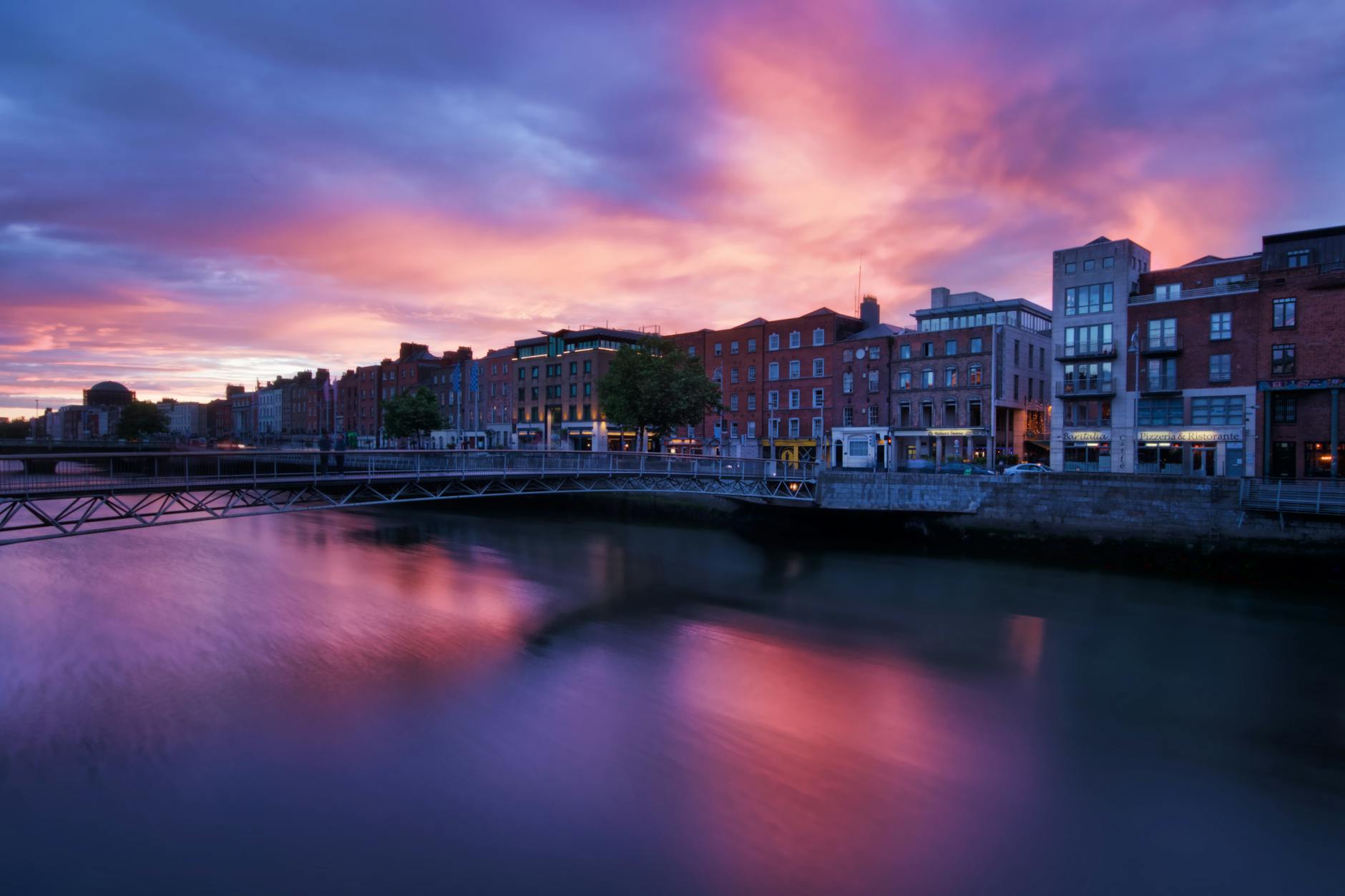
Georgian Dublin around Merrion Square sits a short walk east of the Green. The square itself is a preserved 18th-century residential set piece, framed by brick townhouses, government buildings, and the National Gallery of Ireland on its west side. Hotels here tend to be smaller, quieter, and housed in converted Georgian buildings rather than purpose-built blocks.
The practical difference is density. Around the Green you’ll find more rooms, more restaurants, and more foot traffic. Around Merrion Square you get fewer options, more space between them, and a calmer rhythm, at the cost of needing to walk a bit further for a late meal or a pint.
Who St Stephen’s Green suits
First-time visitors who want to tick off the big sights on foot. From the Green you can reach Trinity College, the National Museum of Ireland on Kildare Street, the National Gallery, and Grafton Street shopping without touching public transport. That saves time and taxi fares on a short trip.
Shoppers and people who like a buzz outside the door. Grafton Street and the surrounding lanes (South William Street, Drury Street) have cafés, pubs, and independent shops within two or three minutes. If you want options at 8pm without planning, this is the easier base.
Travellers with limited mobility who still want to be central. The park is flat and paved on its main paths, there are benches throughout, and the Luas tram stops at St Stephen’s Green, connecting you to the north side and Heuston station. Ask your hotel about step-free entrances, since some older buildings on the square have a few stairs at the door.
Who Georgian Dublin and Merrion Square suits
Couples and quieter travellers who want architecture and calm. The terraces around Merrion Square and neighbouring Fitzwilliam Square are some of the best-preserved Georgian streetscapes in the city. Evenings are markedly quieter than around the Green, which suits early nights and slow mornings.
Museum-goers and literary travellers. The National Gallery of Ireland, the Natural History Museum on Merrion Street, and the 18th-century rooms of Leinster House (viewable on arranged tours) are all on the doorstep. This is the Dublin of plasterwork, fanlights, and doorways rather than neon and buskers.
People attending events at the Convention Centre or the Aviva Stadium side of town, or who want to be near the offices around Baggot Street and Fitzwilliam Place. Merrion Square is also a reasonable compromise for travellers who want to be central but not inside the busiest tourist core, and it’s a 20-25 minute walk to Grafton Street when you do want it.
Prices, rooms and what your money buys
Expect St Stephen’s Green to carry a premium for the postcode. Large chain hotels and grand historic properties dominate, and weekend rates in summer can climb steeply, sometimes well over €250 (roughly $270) for a mid-range double. You are paying for location and, in the older buildings, for character.
Merrion Square and the surrounding Georgian streets often give you more room for the same money. Smaller hotels and guesthouses in converted townhouses are common, and midweek rates are frequently kinder. Ask specifically about room size and whether the room faces the street, since Georgian buildings vary enormously inside.
Breakfast is a real dividing line. Around the Green, many hotels charge separately for breakfast, and nearby cafés are everywhere if you’d rather eat out. In the Georgian area, smaller guesthouses more often include breakfast in the rate. Always confirm what’s included before comparing headline prices, and check whether a city tax or service charge is added at checkout.
Getting around and practical logistics
The Luas Green Line stops at St Stephen’s Green, which makes it the stronger base if you plan to use the tram to reach the Docklands, Heuston station, or the north city. Several Dublin Bus routes run along nearby streets, and taxis are easy to flag around the Green.
Merrion Square has no tram stop of its own, but it’s a short walk to the Green Line at St Stephen’s Green or to Pearse Station for DART commuter trains along the coast. Buses run along Merrion Square South and Clare Street. For Dublin Airport, both areas are roughly 25-40 minutes by taxi depending on traffic; ask your hotel to book one the night before an early flight.
Parking is limited and expensive in both districts, and many Georgian buildings have no car park at all. If you’re driving, confirm parking before booking; on-street paid parking in the city centre is typically charged by the hour and enforced during business hours. For most city breaks, arriving by public transport and walking is simpler than renting a car.
Eating, drinking and evenings out
Around St Stephen’s Green you’re spoiled for choice within five minutes: pubs, brunch spots, and restaurants along South William Street and Dawson Street. It stays lively into the evening, which is great if you want atmosphere but less so if you want silence at 11pm. Ask for a room away from the street if noise matters to you.
Merrion Square is quieter after office hours. There are a handful of pubs and restaurants on and around Baggot Street, Mount Street, and Lower Merrion Street, and the selection improves as you head toward Fitzwilliam Square and Baggot Street Bridge. Plan an evening meal slightly in advance here, or walk the 10-15 minutes into the Green’s orbit.
Both areas are safe and well-lit for evening walking, and both are within easy reach of the traditional music pubs around Temple Bar if you want a night out; it’s a 15-20 minute walk from either, or a short taxi. Booking dinner on Friday and Saturday nights is wise in both districts, since the better-known places fill up.
How to choose, and a sensible split
Choose St Stephen’s Green if it’s your first visit, you want shopping and sights on foot, you value tram access, and you don’t mind paying for a central postcode. It’s the lower-friction option and the one most travellers will be happiest with for a two- or three-night trip.
Choose Georgian Dublin around Merrion Square if you want quieter nights, period architecture, museum proximity, and often better value per room. It rewards travellers who are comfortable walking 15-20 minutes to the busier streets and who prefer a calmer base to come back to.
If you have a week, split it: three nights near the Green for the sights and shopping, then two or three nights in the Georgian squares for the architecture and a slower pace. The two areas are about a 15-minute walk apart, so you’re never really far from either, and moving hotels mid-trip is easy by taxi or on foot with a small case.
Before you book
What people ask before booking St Stephen’s Green.
Yes. Merrion Square to St Stephen’s Green is roughly a 15-minute walk, and on to Grafton Street another couple of minutes. The route is flat and straightforward via Merrion Square South, Clare Street, and the top of the Green. It’s an easy walk by day or evening, though you may prefer a taxi with heavy luggage.
St Stephen’s Green is the easier first-trip base. Trinity College, the National Museum, the National Gallery, and Grafton Street shopping are all within a short walk, and the Luas tram stops on the Green. Merrion Square is quieter and often better value, but you’ll walk a bit further to the main sights and evening buzz.
Often, yes, particularly midweek and outside peak summer weekends. Smaller townhouse hotels and guesthouses around the Georgian squares frequently undercut the big hotels by the Green. Compare what’s included, though: breakfast and room size vary a lot, and confirm any added charges before you book.
Merrion Square has no Luas stop of its own. The nearest Green Line stop is at St Stephen’s Green, about a 10-15 minute walk. Dublin Bus routes run along Merrion Square South and nearby Clare Street, and Pearse DART station is a short walk east for coastal commuter trains.
It depends on the street. The square itself is calm, but streets like South William Street and Dawson Street stay busy into the evening. If you’re noise-sensitive, ask for a room facing away from the street or onto an internal courtyard, and check whether the hotel has double glazing.
Parking is limited and often expensive in both districts, and many Georgian buildings have no car park at all. Confirm parking availability and cost directly with the hotel before booking. On-street paid parking in the city centre is charged by the hour and enforced during business hours, so a car is rarely worth it for a city break.