Rathmines
A lived-in southside neighbourhood with Victorian terraces, a busy main street and easy access to the city centre.
 Rathmines
Why people stay in Rathmines
Rathmines sits about 2.5 km south of Dublin’s city centre, on the south bank of the Grand Canal. It is not a tourist quarter. It is a working residential district with a long main street, a mix of Victorian red-brick terraces, apartment blocks and student housing, and a steady population of locals, families and students from nearby colleges. The Grand Canal forms its northern edge, and the walk along the towpath toward Portobello or back into the city is one of the area’s quiet pleasures. The area grew up in the 19th century as a suburb and still has that dense, low-rise, brick-built feel.
This area suits people who want to stay somewhere real rather than somewhere staged, and who value a short commute over having a landmark on the doorstep. It is good for longer stays, for couples, and for anyone who wants a supermarket, a laundrette and a pub that is not priced for tourists within a two-minute walk. It does not suit travellers who want to step out of the hotel into Temple Bar or who need major sights within walking distance. If your priority is sightseeing on foot from morning to night, base yourself closer to the centre.
By day, Rathmines is a functional high street: buses, school runs, people queuing for coffee, delivery bikes. It gets busy at commuter hours and quietens mid-morning. In the evening the pubs and restaurants along the main street fill up, especially on weekends when students and locals mix. It stays lively but not wild, and it is not a late-night clubbing district. After about 11pm the streets get noticeably quieter, and the residential side roads are calm. Expect a friendly, ordinary, slightly scruffy urban atmosphere rather than a polished one.
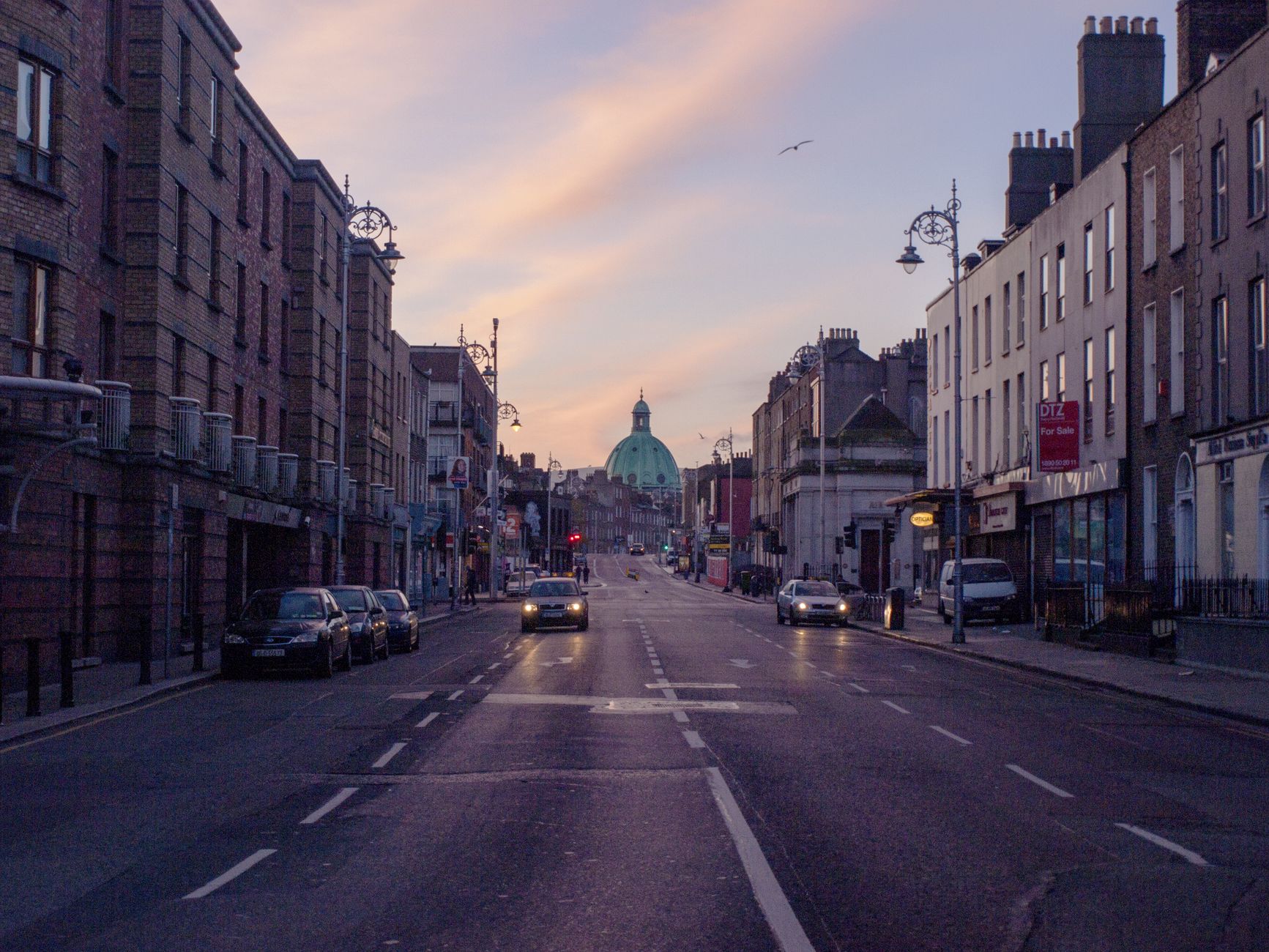
The spine of the area is Rathmines Road Lower and Upper, lined with shops, pubs, cafes and a couple of small shopping centres. Off the main road, the side streets hold red-brick terraces, some with original details, and small garden squares. The Grand Canal to the north is the best place for an easy walk, with swans, barges and a flat towpath. The area has churches, schools and a library that anchor daily life. It is a place where people actually live, so you will see the same faces at the same coffee counters by the end of a week.
Eating here is casual and good value. The main street has a run of cafes, bakeries, takeaways and mid-range restaurants covering Italian, Asian and Middle Eastern food, plus solid pub grub. There is no famous market in Rathmines itself, but the proximity to the city means you are never far from one. Locals tend to eat early and close to home on weeknights. Ask your host or the staff at your hotel for the current favourites, because the line-up on this street changes more than in the tourist core. Expect to spend less per meal here than in Temple Bar.
Dublin weather is mild and changeable year-round: expect rain in any month and bring a waterproof layer. Spring and early summer are pleasant for the canal walk, and autumn is often clear and crisp. The area is busy with students from September to May, which affects noise and bus queues. July and August are quieter on the residential streets but the city centre is at its most crowded. There is no single best season; the area works year-round. Winter evenings are dark by late afternoon, so plan indoor activities for after 4pm.
Rathmines is mid-range for Dublin. Hotel rates are generally lower than the city centre and much lower than the areas around St Stephen’s Green. Expect budget and mid-range options with the occasional higher-end room; prices vary a lot by season and by how far you are from the main road. Food and drink costs are ordinary neighbourhood prices, cheaper than the tourist core. Public transport is cheap and the city is a short bus ride away. Budget for taxis home late at night if you are out in the centre, since night buses are limited.
Before you arrive, know that Rathmines is a residential area, so noise rules and early closing apply more than in the centre. Check whether your room faces the main road, which carries bus traffic from early morning. Parking is limited and mostly paid or permit-only, so a car is a liability here. Confirm the nearest bus stop to your hotel, since the main street is long. And set expectations: this is a place to live like a local for a few days, not to tick off sights from your window.
The best places to stay in Rathmines are the side streets just off the main road: Rathmines Road Lower closer to the canal gives you the quickest walk into the city and to the Grand Canal towpath, while the roads running east and west off the main street are quieter and more residential. Rooms facing the main road pick up bus noise from early morning, so ask for a rear or side room if you are a light sleeper. The area is mostly small hotels, guesthouses and serviced apartments rather than large chains, with a handful of budget options near the canal and mid-range rooms along the main street. Expect roughly €110–200 (about $120–220) per night for a mid-range double, less in winter and more during big event weekends in the city. The canal end is the calmest and most attractive for a short stay; the stretch further south around the shopping centre is busier and more functional. Book early for September and the summer months, when student and visitor demand overlap.
Things to do in Rathmines

The canal runs along the northern edge of Rathmines and is the area’s best free activity. Walk west toward Portobello or east back toward the city along the flat towpath, watching for swans, barges and the locks. It is peaceful even when the main street is busy. Go in the morning for the quietest stretch, or late afternoon for better light. Bring a rain jacket, since the path is exposed. Allow 45–90 minutes depending on how far you go, and rest at one of the canal-side benches or cafes near the bridges.

Rathmines Road is a proper neighbourhood high street with independent shops, a couple of small shopping centres, bookshops and everyday services. It is not a shopping destination in the tourist sense, but it is useful and gives you a feel for how the area lives. Wander it on a weekday morning when it is calm, and stop for coffee. This is also where you will find a supermarket and a pharmacy if you need supplies. Allow an hour; it pairs well with the canal walk.

The pubs and restaurants along the main street are where residents actually spend their evenings, so prices are reasonable and portions are generous. Expect a mix of pub grub, Italian, Asian and Middle Eastern food, plus good cafes for breakfast. Weeknights are calmer; weekends are busier and it is worth booking if you have a larger group. Ask your hotel for current recommendations, since the line-up changes. Budget roughly €15–25 (about $16–27) for a main course and a drink at the cheaper end.

Rathmines is close enough to walk into the centre on a dry day, following the main road north to the canal and then on toward Grafton Street and Trinity. It takes around 30–40 minutes at an easy pace and gives you a sense of how the neighbourhood connects to the city. Wear comfortable shoes and take a rain layer. Do it in the morning when the streets are fresh, and take a bus back if the weather turns. It is a good way to save taxi fares and see the transition from suburb to centre.

The cafes along the main street are a low-key way to start the day and a good place to people-watch the morning commute. Expect pastries, full breakfasts and good coffee at neighbourhood prices. They fill up between 8am and 9.30am with workers and students, so go slightly later if you want a seat. This is also a useful moment to ask staff about local events, markets or the quickest bus routes. Allow 45 minutes and budget around €8–14 (about $9–15) per person.

The red-brick Victorian terraces on the streets off the main road are the area’s quiet architectural pleasure: bay windows, coloured doors, small front gardens. There is no formal trail, but a gentle wander on the residential streets gives you a sense of 19th-century Dublin suburbia. Keep it respectful, since these are people’s homes, and go on a weekday when it is quiet. Pair it with a walk to the canal. Allow an hour and bring a camera for the doorways and brickwork.
What to see
Hotels near Rathmines
No hotels are listed in Rathmines yet. The nearest ones are on the region page.


Every hotel we cover in Rathmines
- The Wilder 4★ · 4.7/5
- Clayton Hotel Charlemont Dublin City 4★ · 4.6/5
- Uppercross House Hotel 3★ · 4.4/5
- Hilton Dublin 4★ · 4.2/5
- NYX Hotel Dublin Portobello 4★ · 4.2/5
- No 9 Rathgar 3★ · 4/5
- Pavilion View 3★ · 4/5
- Travelodge Dublin City Rathmines 3★ · 3.9/5
- The Dublin Vikings Place 2★ · 3.8/5
- The Van Morrison Suite hiphipstay 5★
- Dublin 6 Rathgar easy access to downtown 4★
- Niche Living Rathmines 4★
- Welcoming 4BD House with Garden in Dublin 4★
- Ardagh House 3★
- Charlemont Holiday Apartment 3★
- Charming 2 Bedroom Home in Rathmines Dublin 3★
- Days Hotel Rathmines Dublin 3★
- Eastpark Lodge 3★
- Kilronan House 3★
- Marilyn Mansion Dublin 3★
- Modern Loft 1 Bedroom Studio in Heart of Rathmines Dublin 3★
- Mount Argus Self Catering 3★
- Ranelagh Rooms 3★
- Rathmines Capital 3★
Getting around Rathmines
Rathmines is served by several Dublin Bus routes running along the main street into the city centre, with the journey typically taking 15–30 minutes depending on traffic. From Dublin Airport, the most straightforward options are a taxi or app (roughly 30–45 minutes and a higher fare at peak times) or a bus into the centre followed by a local bus or a short taxi ride out to Rathmines. There is no tram stop in Rathmines itself; the nearest Luas stops are a walk away toward the city, so check your specific hotel location before relying on it. Driving is possible but parking is limited, mostly paid on-street or permit-only, so a car is not recommended for a city stay. The area is walkable for daily needs: the main street has everything within a few minutes, and the city centre is a 30–40 minute walk or a short bus ride. Taxis and apps are easy to find on the main road but scarcer on the side streets late at night, so plan your return. Allow extra time at commuter hours, when buses fill up with students and workers.
Questions about Rathmines
It depends on your priorities. Rathmines is a real residential neighbourhood with good value and a short bus ride or 30–40 minute walk into the centre, so it suits longer stays and travellers who want local life. But it is not a sightseeing base: you will not step out onto a landmark, and you will need transport or a walk to reach the main attractions. If you want to be in the middle of things from morning to night, stay closer to the centre. If you want calm, value and a lived-in feel, Rathmines works well.
A taxi or app is the simplest option and typically takes 30–45 minutes depending on traffic, with a higher fare at peak times. Cheaper is to take an airport bus or coach into the city centre and then a local bus or short taxi to Rathmines; allow around an hour in total. There is no direct tram from the airport to Rathmines, so check your hotel’s nearest bus stop before you arrive. If you are arriving late, pre-book a taxi or confirm the last bus times, since night services are limited.
The main draws are everyday rather than monumental: the Grand Canal towpath for a flat waterside walk, the main street for independent shops, cafes and pubs, and the residential side streets for Victorian red-brick architecture. It is a place to live like a local for a few days rather than to tick off sights. Most visitors use it as a calm base and travel into the centre for the big attractions. Ask your hotel for current cafe and restaurant recommendations, since the line-up changes.
Parking is limited and mostly paid on-street or permit-only for residents, so a car is a liability for a city stay. Some hotels and serviced apartments have a small number of spaces, but you should confirm before booking. If you are driving, expect to pay for on-street parking and to hunt for a space at busy times. For most visitors, public transport plus walking is easier and cheaper. Ask your host where guests usually park if you must bring a car.
Expect roughly €110–200 (about $120–220) per night for a mid-range double, with lower rates in winter and higher rates during big event weekends in Dublin. Budget and guesthouse options sit at the lower end, and the area is generally cheaper than the city centre. Food and drink are neighbourhood prices, with a main course and a drink at the cheaper end around €15–25 (about $16–27). Prices vary by season and by how close you are to the main road, so check current rates before booking.