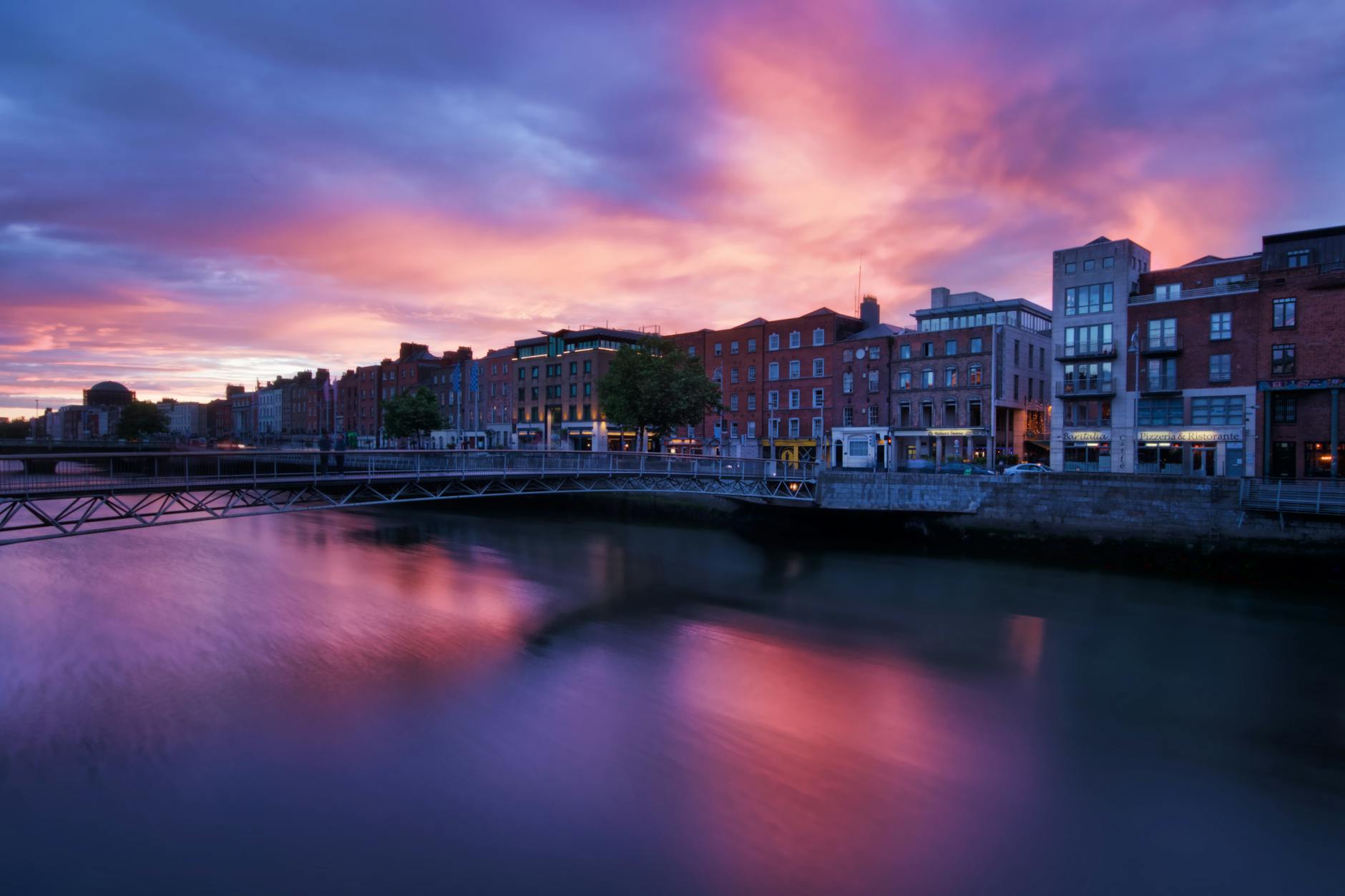
The Docklands: Business Hotels and Riverside Walks in Dublin

A practical look at Dublin’s Docklands as a place to stay: what the business hotels actually offer, how the riverside walks work, and how to get into the city centre without wasting your morning.
What the Docklands actually are
Dublin’s Docklands run along both banks of the Liffey east of O’Connell Bridge, roughly from the Custom House out towards the Point and beyond. The north side is dominated by the IFSC, a cluster of glass office buildings with hotels built to serve it; the south side around Grand Canal Dock is a mix of tech offices, apartments and the water itself. It is a working district first and a tourist area second, which is exactly why some visitors like it and others don’t.
The streets are wide, the pavements are clean, and the office blocks are new rather than Georgian. You won’t find medieval lanes or rows of pubs here. What you get instead is space, calm in the evenings once offices empty, and a steady line of sight down the river. Expect to walk a lot between your hotel and any restaurant that isn’t attached to an office block.
Note that the Docklands are the eastern edge of what this guide covers, not the centre of it. If your main plan is Temple Bar, Grafton Street and St Stephen’s Green on foot, the Docklands will feel like a commute. If your plan involves meetings in the IFSC or Grand Canal, it is hard to beat.
Business hotels: what you’re really booking
The hotels here are purpose-built for corporate travel. Rooms tend to be bigger and more uniform than the older city-centre stock, with proper desks, reliable air conditioning and blackout curtains. Gyms are common; so are meeting rooms and a lobby bar that is quiet by 9pm. If you’ve stayed in a mid-range or upscale chain in another European business district, you know the shape of it.
The trade-off is character. You are unlikely to get a creaking Georgian floorboard or a view of a cathedral. You are likely to get a functioning iron, a kettle, and a shower with decent pressure. For people who are working, that’s often the point.
Prices vary sharply with demand rather than season: midweek nights when there’s a conference or a match at the nearby arena can spike well above the weekend rate, which is the opposite of what many travellers assume. Ask your host or check rates for your exact dates. As a rough guide, expect a midweek double in a chain business hotel to start somewhere in the low-to-mid 100s of euros, with event nights significantly higher.
The riverside walks worth doing
The obvious walk is the north quay path along the Liffey, heading west towards the Custom House and the Ha’penny Bridge. It is flat, mostly level, and takes you past the Custom House itself, a fine 18th-century building with a copper dome that is worth a pause. Follow it as far as O’Connell Bridge and you’re into the main shopping spine.
On the south side, the walk from Grand Canal Dock towards the city follows the canal rather than the Liffey, passing the water and the surrounding office plazas. It is quieter and greener than the Liffey path. Keep going and you can connect through to the area around St Stephen’s Green, though it’s a solid 30-plus minutes at a normal pace.
Bring a jacket. The wind funnels down the river even on bright days, and there is very little shelter between buildings. Good shoes matter more than you’d think on the paved stretches. Avoid the temptation to walk along the very edge of the quays after dark; stick to the lit paths and the crossings with signals.
Getting into the city centre
The Luas tram is the workhorse here. The red line runs through the Docklands and connects you west towards the city centre and beyond; the stops are frequent and easy to find. Buy a Leap card if you’re staying more than a day or two — it works on the Luas, buses and commuter rail, and saves you fumbling for change.
Walking is genuinely viable for the eastern half of the centre. The Custom House and O’Connell Street are maybe 15 minutes from the IFSC on foot. Trinity College and Grafton Street are closer to 25 to 30 minutes from Grand Canal Dock, depending on where you start.
Taxis are plentiful in the evenings because of the office trade, but scarce in bad weather. If you’re heading to a dinner reservation on the other side of the city, leave a buffer. Buses run along the quays but traffic can be slow at rush hour, so the tram is usually the more predictable choice.
Eating and drinking around the offices
Lunch is the strong suit. The Docklands has a dense cluster of cafés, sandwich bars and casual restaurants catering to office workers, and they are generally good value and fast. Use them. The same places thin out or close early in the evening, which catches visitors out.
For dinner, you’re better off walking west into the older parts of the city or crossing to the south side around Grand Canal Dock, where a few more options stay open later. Don’t expect a late-night scene. This is not Temple Bar and it isn’t trying to be.
If you want a proper pub evening, plan to travel. The traditional pub experience most visitors picture is in the centre and in the Liberties rather than here. The hotel bars are fine for a nightcap but they are hotel bars. Check opening hours directly rather than trusting a map listing, as they change by season.
Who should stay here, and who shouldn’t
Stay in the Docklands if you have business in the IFSC or Grand Canal, if you value a quiet room and a reliable desk, or if you’re in Dublin for a specific event at one of the venues east of the centre. It also suits travellers who dislike noise and want to sleep with the window open.
Don’t stay here if this is your first short visit and you want to walk out of the door into pubs, bookshops and old streets. You’ll spend your days commuting west and your evenings walking back. Families generally find it calm and safe, but there is little to entertain children in the immediate area beyond the water and the open space.
A middle path: split your stay. A couple of nights in the Docklands for work, then move to a hotel around St Stephen’s Green or Grafton Street for the sightseeing half. It costs a little more in admin but you get both versions of the city.
Practical notes for a first stay
Book with your exact dates in mind. Rates here swing with conferences and events far more than with the calendar, so a price you saw last month may not exist now. Ask the hotel directly about anything you need — parking, late checkout, a quiet room away from the tram line.
The area is well lit and feels safe at night by city standards, with plenty of foot traffic during office hours. After about 10pm it gets very quiet, which is pleasant if you’re staying but means fewer people around. Keep to main routes and use licensed taxis if you’re unsure.
Finally, don’t treat the Docklands as the whole of Dublin — it’s the eastern slice of a much older city. The point of staying here is comfort and convenience, not atmosphere. Save your atmosphere budget for the Georgian squares and the older streets, and you’ll get the most out of both.
Before you book
What people ask before booking Docklands.
Only if you have a specific reason, such as business in the IFSC or an event nearby. For a first sightseeing trip, the Docklands sits east of most of the old city, so you’ll walk or take the tram every day to reach Temple Bar, Grafton Street and the Georgian squares. It’s calm and comfortable but lacks street atmosphere.
Roughly 20 to 30 minutes depending on where you start, following the quays west and then crossing the Liffey. It’s a flat, straightforward walk in good weather. In rain or wind, take the Luas red line instead; it’s quicker and you’ll arrive drier.
Fewer than at lunchtime. The area is built around office workers, so many cafés and casual spots close in the late afternoon. You’ll find some options near Grand Canal Dock and in the hotels, but for a proper dinner it’s usually better to head west into the city centre.
Many business hotels offer breakfast, sometimes included in a rate and sometimes as an add-on. Quality varies from a full hot buffet to a basic continental spread. Compare the room-only and breakfast-inclusive rates before booking, as the difference is often worth paying for in convenience.
The Luas red line is the most predictable option, with frequent trams and stops through the district. Walking works well for the eastern centre. Buses run along the quays but can be slow at rush hour. A Leap card covers tram, bus and commuter rail and is worth buying for stays of more than a day or two.
It’s well lit and generally feels safe, with plenty of people around during office hours. After about 10pm it becomes very quiet, so stick to main routes, cross at signalised crossings, and use a licensed taxi if you’re unsure of the way back to your hotel.